
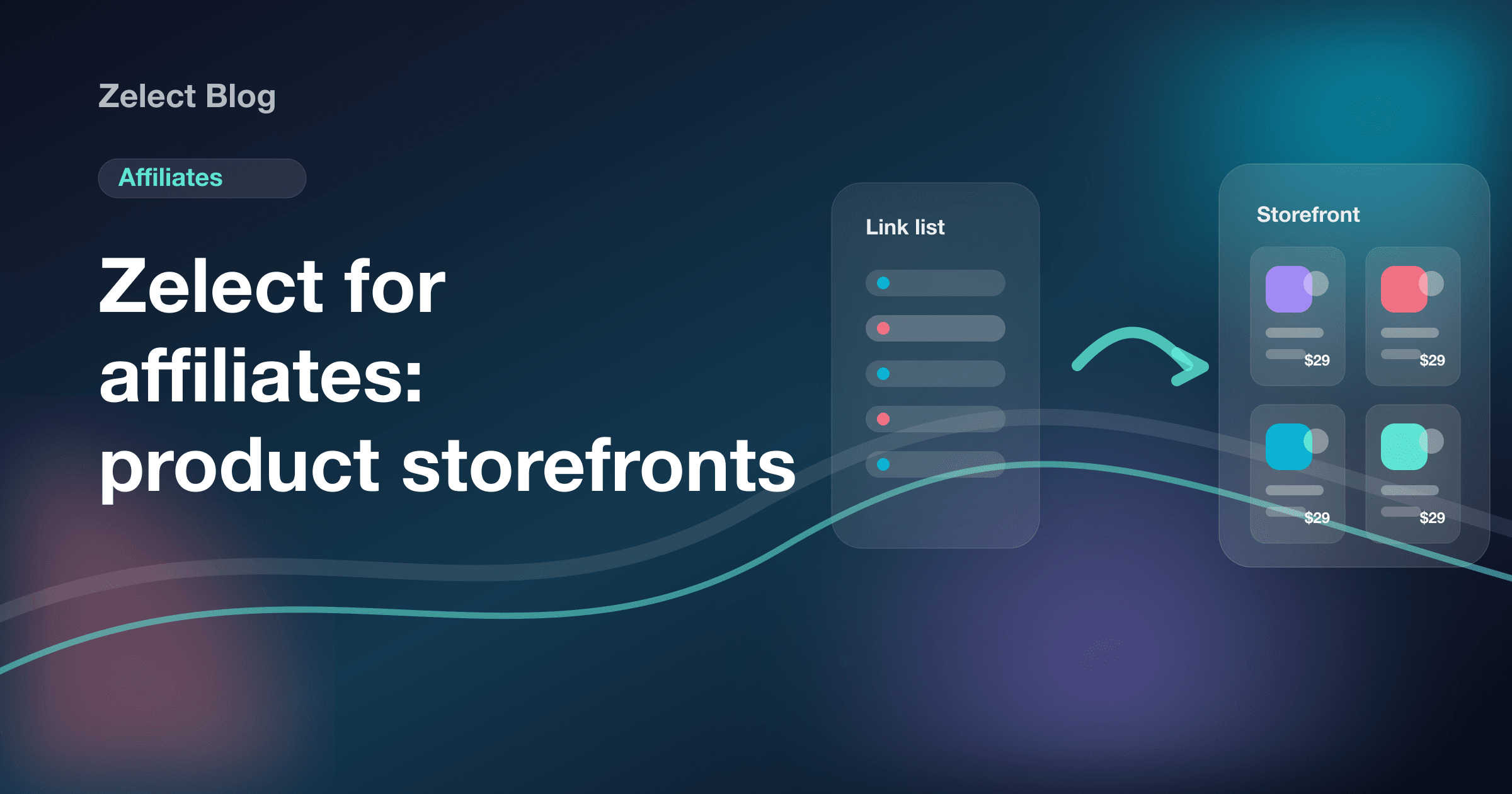
If you're a content creator, you've almost certainly used a link-in-bio tool. Linktree, Beacons, Milkshake — they all do the same job: one URL, multiple links, done. For organizing your social profiles and newsletter, they're perfectly fine.
But if affiliate product recommendations are a meaningful part of how you monetize your audience, these tools start showing their cracks fast.
Here's what changes when you move from a link list to a real affiliate storefront.
What Link Lists Do Well — and Where They Fall Short
Link-in-bio tools are great at aggregating. They let you put your YouTube, Instagram, podcast, and newsletter in one place so followers don't have to hunt. That's genuinely useful.
The problem is that aggregation isn't the same as selling. When someone taps your bio link expecting to find the products you recommended in your last post, they land on a wall of generic text links. Which one has the skincare? Is it "my favorites" or "shop my looks"? Why are there ten links and none of them show a product image?
That friction — even a few seconds of confusion — kills conversions. People click away.
The Specific Problems With Link Lists for Affiliates
No visual context. A link labeled "my tech picks" doesn't show the product. The follower has to click blind, without knowing if what's on the other side matches what they're looking for. Visual products need visual presentation.
No category structure. How do you separate beauty from gadgets from books in a linear list? You can't, really. You end up with workarounds (multiple links per category, long labels) that make the page harder to scan, not easier.
Zero SEO value. Your Linktree page is not indexed by Google in a way that helps you rank for product queries. Someone searching "best [product category] recommended by [your name]" won't find your link list in search results. That organic discovery channel simply doesn't exist.
It doesn't scale. Five products? A list works. Fifty products across four categories with seasonal collections? A list becomes unmanageable.
What an Affiliate Storefront Changes
A storefront is built around the concept of a product, not a link. That architectural difference changes everything downstream.
Products Look Like Products
In a storefront, each item has an image, a name, and a direct purchase link — whether that goes to Amazon, a brand's site, or any affiliate platform you use. Followers see what they're clicking before they click it. That single change — visual confirmation — meaningfully improves click-through rates.
It mirrors how people already shop online. They expect to see a product before they act on it. Give them that, and you remove a major point of friction.
Pages and Collections That Match Your Content
With Zelect, you can build multiple pages inside your storefront — one per niche, collection, or campaign. Skincare on one page. Desk setup on another. Holiday gift guide as its own page. Each page has its own URL you can drop in Stories, TikTok captions, or YouTube descriptions.
Instead of sending everyone to the same generic bio link, you send each audience to exactly the right shelf. A viewer who just watched your home office tour gets the desk setup page. A follower from your skincare Reel gets the skincare collection.
SEO That Actually Works
This is one of Zelect's most underappreciated features. Storefront pages are generated statically (SSG/ISR), which means Google indexes them like regular web pages.
The implication: your product pages can rank in search. Someone typing "best wireless earbuds for commuting" could find your recommendation page — not because of an algorithm, but because Google indexed a real webpage with real content. That's a discovery channel that a Linktree page can never offer.
A Professional Look That Builds Trust
Zelect offers three visual themes — Bold, Classic, and Minimal — designed for different creator aesthetics. A fashion influencer might want Bold. A minimalist lifestyle creator might prefer, well, Minimal. A tech reviewer might go with Classic.
This matters beyond aesthetics. A storefront that looks polished and intentional signals that you take your recommendations seriously. Followers trust curated experiences over cluttered link dumps. That trust translates to clicks, and clicks translate to commission.
"But I Already Pay for Linktree…"
A fair objection. Switching tools has a cost — time, setup, the inertia of what's already working.
The better question is: is your current link-in-bio tool actually converting affiliate clicks? If you can't answer that clearly, or if the answer is "not really," it's worth running a side-by-side comparison.
Zelect has a free plan that doesn't expire — no trial period, no credit card required to start. You can build your storefront, add your existing affiliate products, and see how the experience compares, without canceling anything you have now.
Who Should Make the Switch
You'll get the most from an affiliate storefront if:
- You recommend products regularly on Instagram, TikTok, YouTube, or a blog
- You're already in affiliate programs (Amazon Associates, Shopify Collabs, LTK, etc.)
- You have more than ten products you'd want to organize meaningfully
- You want product pages to show up in Google search results
If you occasionally drop an affiliate link but it's not a core part of your monetization, a link list is fine. But if you're serious about turning recommendations into income, you need a tool built for that specific job.
The Bottom Line
Linktree isn't bad — it's just not built for affiliate commerce. It was designed to aggregate links, and it does that well. But aggregating links and converting followers into buyers are fundamentally different tasks.
An affiliate storefront handles the whole job: visual product presentation, organized collections, SEO-indexed pages, and a shopping experience that actually makes sense for someone who just watched your content.
If you haven't set up yours yet, Zelect takes under ten minutes to get started. The free plan doesn't expire. There's no reason not to try it.